



Taste and Eating Experience: A Tale of Two Extremes
If you've ever bitten into a salty plum without knowing what to expect, you'll remember the moment clearly. The initial wave is intensely salty, followed by a sour tang, and finally a faint, earthy sweetness that lingers. The texture is typically firm and slightly wrinkled, a bit chewy without being tough. It's the kind of snack that keeps your mouth busy.
Dried mango, on the other hand, is a gentler experience. The flesh is soft and slightly sticky, releasing a full tropical sweetness the moment it hits your tongue. There's a mild tartness at the edges, especially in naturally dried varieties without added syrup, but it quickly gives way to that characteristic mango warmth. It's unambiguously satisfying from the first chew
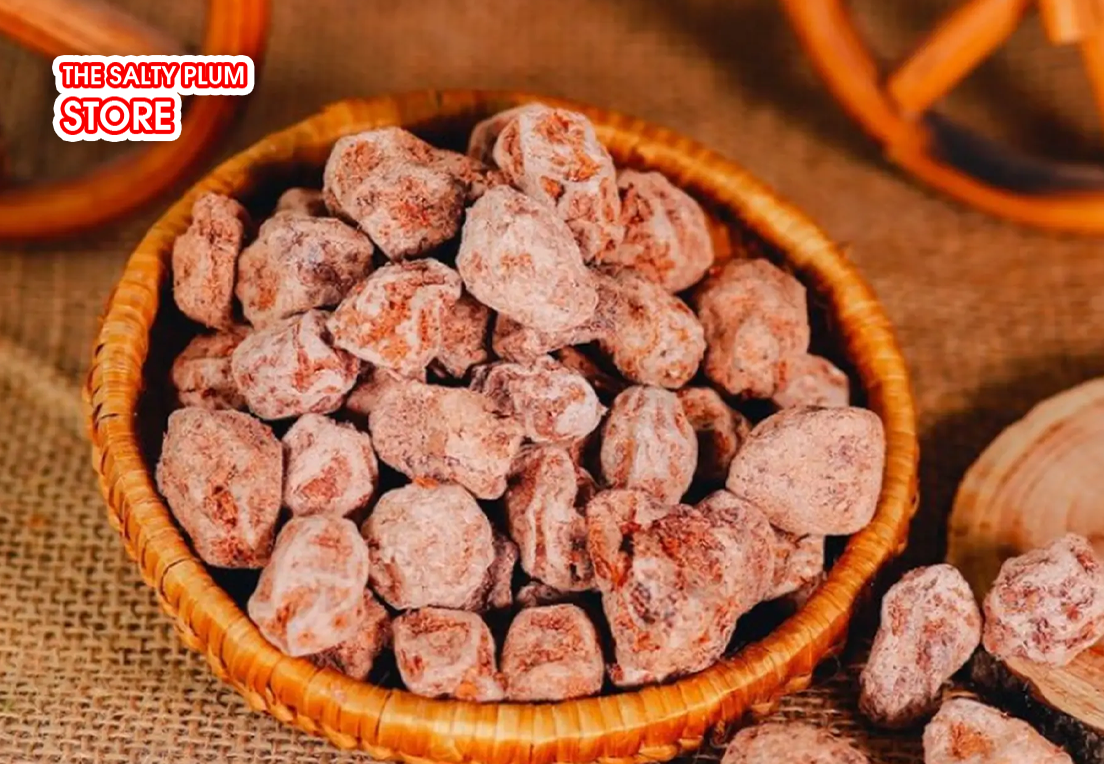 Salt plum close up taste profile
Which One Is More Versatile?
Dried mango wins on versatility. It pairs easily with nuts, yoghurt, oat based trail mixes, or can be eaten straight out of the bag as a pick me up between meetings. Many health conscious snackers in Gordonvale reach for it as a quick natural energy boost before or after exercise.
Salty plum is more of an occasion snack. It's the one you pull out during a long drive, at the cinema, or when you want something to do with your hands that isn't chips. In many Asian communities across Queensland, it's deeply familiar comfort food, eaten slowly, one piece at a time, and deeply appreciated by those who grew up with it.
The "Hidden Sugar" Trap: What You Actually Need to Know
Here's where most snack shoppers get caught off guard. Both salty plum and dried mango are made from fruit, so they both carry natural fruit sugars. The issue is that drying concentrates those sugars significantly, and many commercially produced versions add extra syrup on top. Understanding the difference between natural and added sugar in dried fruit is one of the most practical dried fruit health benefits conversations you can have.
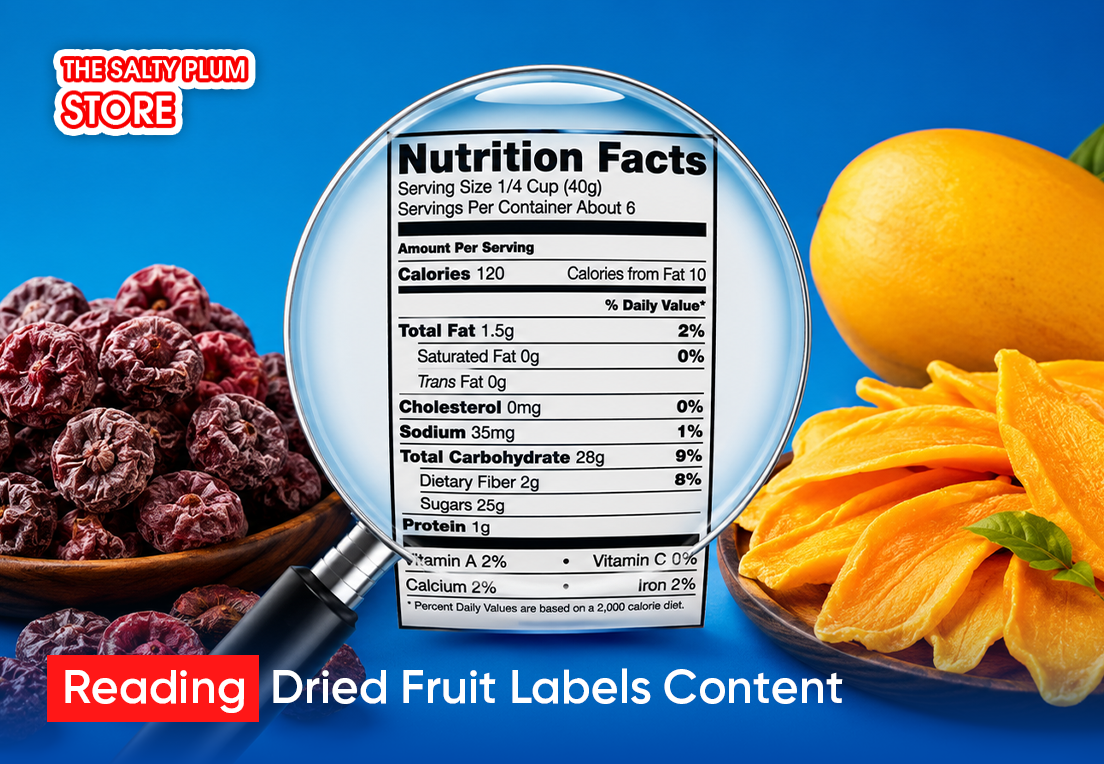 Reading dried fruit label sugar content
The "Hidden Sugar" Trap: What You Actually Need to Know
Natural Sugar vs Added Sugar, Why It Matters
Natural fructose, the sugar found in whole fruit, is metabolised differently from refined sucrose or glucose syrup added during processing. When you eat a piece of naturally dried mango, your body also receives fibre, which slows the absorption of that sugar. The result is a more gradual blood glucose rise compared to eating a spoonful of table sugar. Added sugars, however, deliver a spike with little fibre to cushion it, and many commercial dried mango products contain both fruit and added syrup to achieve a sweeter flavour and longer shelf life.
Salty plums carry a different warning: sodium. The salt content in traditional preserved salty plums can be quite high, which is worth watching if you have blood pressure concerns. But salty plums tend to be eaten in smaller quantities because the intense flavour simply doesn't invite mindless overconsumption the way mango does.
Portion Control: Why You Eat More Than You Think
This is the most underestimated factor in any dried fruit health benefits conversation. Think about eating ten fresh mango slices versus ten pieces of dried mango. The fresh slices would fill most of a plate and take real time to eat. The dried pieces fit in your palm and disappear in under two minutes. The calorie density and sugar content are the same, but the rate of consumption is completely different. Portion size, not the snack itself, is usually where people go wrong with sugar in dried fruit.
|
|
|
|
|
|
|
|
|
|
|
|
|
|
|
|
|
|
|
|
|
|
|
|
|
|
|
|
|
|
|
|
|
|
|
|
Who Is Each Snack Actually For?
Knowing the nutritional profile is useful, but real life snacking decisions come down to who you are, what you're doing, and what your body actually needs in the moment. Here's how the two stack up when you put them into everyday context.
Dried Mango: Best For
Dried mango suits people who are physically active and need a quick, naturally sweet energy source. It's ideal before a long walk, a morning gym session, or a drive up to the Atherton Tablelands. Parents also love it as a lunchbox option for children who resist less sweet snacks. When bought from a quality source without added sugars, it delivers genuine nutritional value alongside the sweetness kids enjoy.
For anyone managing weight, though, dried mango requires some mindfulness. Because it's palatable and easy to snack on continuously, setting a clear portion, around 30–40g, before you open the bag is the smartest move.
Salty Plum: Best For
Salty plum is the better pick for snackers who want something intense and long lasting without eating a lot. People who find sweet snacks unsatisfying, those who reach for savoury foods instinctively, tend to prefer salty plum because it hits that craving directly. It's also popular among those managing higher blood sugar levels who want to avoid the sweetness of dried mango but still want a flavourful alternative.
Those familiar with traditional Chinese or Vietnamese food culture often have a particular relationship with salty plum. It's tied to memory, to long car trips, to sharing a small bag with people you like. That experiential dimension counts for a lot when choosing a snack.
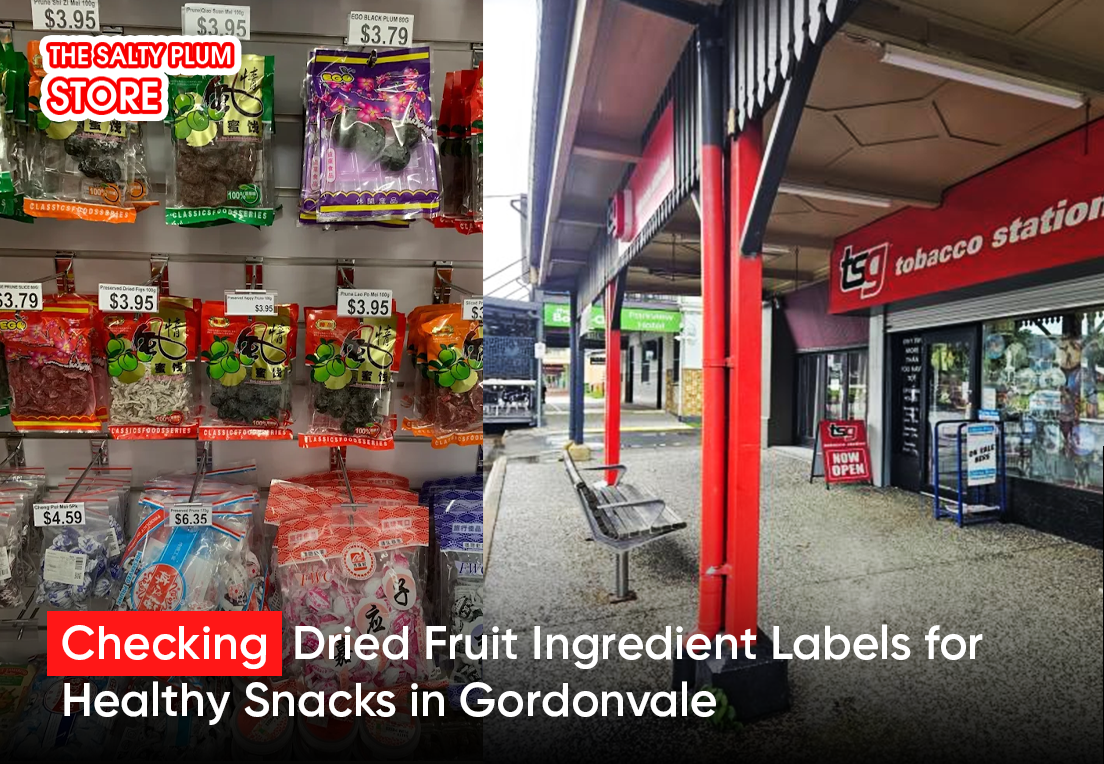 Checking dried fruit ingredients label healthy snacks Gordonvale
Step 1: Read the Ingredients List First, Not the Front of the Pack
Front of pack claims like "natural" or "no preservatives" are marketing language. The ingredients list is the truth. For dried mango, the ideal ingredients list reads: mango. That's it. If you see glucose syrup, sugar, citric acid, or colour 102 (tartrazine) listed, the product has been significantly processed. For salty plum, common additions include salt, licorice, and sometimes a small amount of citric acid. These are traditional and generally acceptable, but the plum itself should still be the first and dominant ingredient.
Step 2: Check the Colour
Naturally dried mango ranges from deep amber to burnt orange, never the bright, almost neon yellow you see in some supermarket varieties. The vivid colour is a sign of sulphur dioxide (220) used as a preservative, which some people are sensitive to. Salty plums should be dark, near black or deep purple, with a matte finish. Shiny, overly uniform plums have often been coated or treated.
Step 3: Smell It Before You Buy
This one is simple but effective. Quality dried mango smells like mango: fruity, slightly floral, with a hint of the tropics. A faint artificial or chemical smell suggests flavouring additives. Salty plum should smell pleasantly sour and earthy, like an aged plum. If it smells strongly of synthetic flavouring, it's been enhanced beyond the traditional recipe.
 Tsg Gordonvale store healthy snacks shop
Conclusion: So, Salty Plum or Dried Mango?
There's no wrong answer. The better choice depends on what you're actually looking for. If you want something tropical, naturally energising, and easy to share with kids or colleagues, dried mango is the pick. If you want an intense, self limiting, savoury sour experience that satisfies without sweetness, reach for salty plum. Both are legitimate dried fruit health benefits contenders when bought from a quality source and eaten in reasonable portions.
The smartest approach, practically speaking, is to combine dried fruit with nuts. A small handful of almonds or walnuts eaten alongside 30g of dried mango slows the sugar absorption, extends the feeling of fullness, and turns a simple snack into something genuinely useful for your energy levels. It's one of the simplest, most overlooked combinations for managing sugar in dried fruit without giving it up entirely.
Related Article:
The Truth About Dried Fruits: Healthy Snack or Hidden Sugar?
Which Type of Salty Plum to Buy? Beginner Guide
Dried Mango Australia: What You Should Know Before Buying